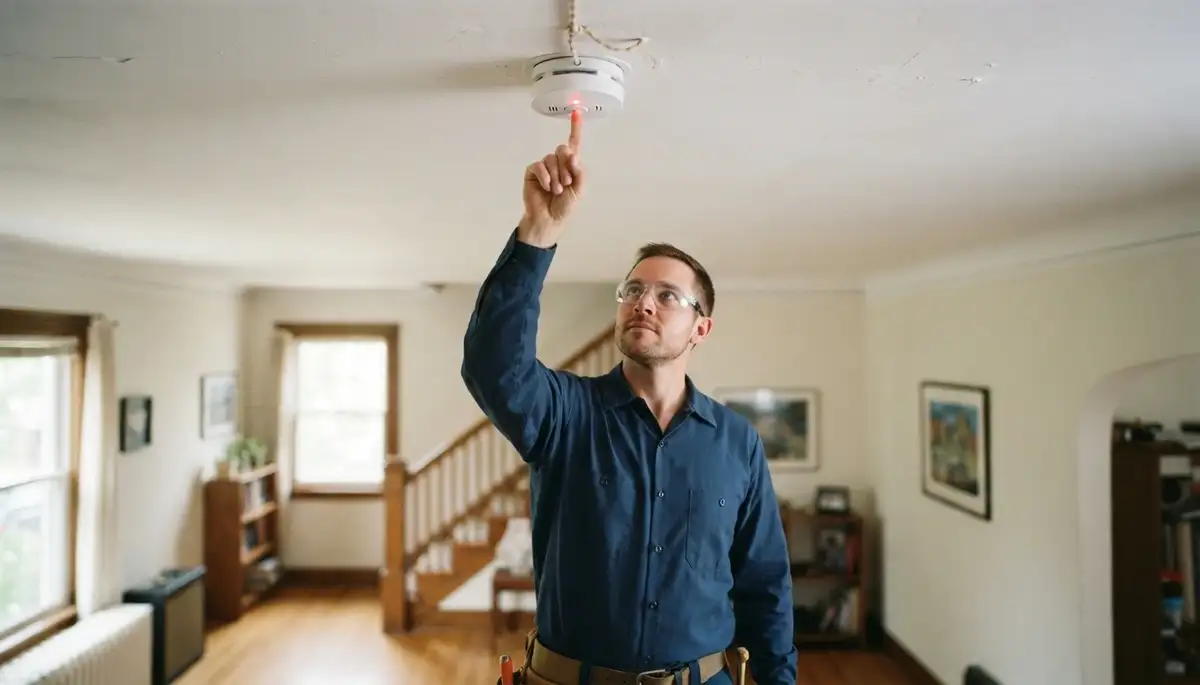
Smoke Detector Installation Built Around How Chicago Homes Are Wired
Smoke detector installation in Chicago has to start with what's already behind the walls, and a lot of the houses here went up between the 1900s and the 1930s, long before grounded wiring or modern alarm circuits were standard. Homeowners working with an electrical contractors serving Chicago team often find the two-prong outlets and ungrounded runs from that era complicate a straightforward alarm job, and pairing the work with professional home electrical inspections catches problems before they become a return visit.
In a brick bungalow or a two-flat with plaster ceilings, running new alarm wiring means fishing cable through lath and plaster instead of open joists, which adds time and sometimes opens a small section of ceiling near each unit. Skipping proper interconnection between detectors, or leaving old smoke detectors on outdated wiring, means an alarm in the basement may never be heard from an upstairs bedroom. Pairing this work with reliable fire alarm installation closes that gap room by room.
Related Electrical Work Local Contractors Handle Across Chicago
Smoke detector installation rarely stands alone in an older Chicago home; these four services are what round out the same visit and the same panel.
Panel Capacity Checks Before Adding Detectors
A fuse box or a panel with no open slots left changes how many hardwired detectors a home can support at once, which is common in houses built before the 1940s. This gets evaluated before any wiring goes in.
Grounding Review For Older Circuits
Homes from this era were wired before grounding and ground-fault protection were required, and that same ungrounded circuit often feeds the hallway where detectors need power. A quality electrical wiring review addresses both at once.
Outlet Testing Near Sleeping Areas
Bedrooms and hallways with no reset buttons nearby are a sign the circuit hasn't been touched since the house was built, and that's exactly where detector power taps are usually pulled from.
Garage and Attic Circuit Access
Detached garages and older attics often carry outdoor runs that aged on a different schedule than the house itself, and that access point matters when detector wiring needs to reach a remote structure. Specialists in generator installation often work the same access points.

How Smoke Detector Installation Timing Shifts Across Chicago Seasons
The same home carries a different load through the year, and each season changes what smoke detector installation needs to account for.
Spring Smoke Detector Installation Scheduling in Chicago, IL
Spring is the window to add hardwired detectors before summer scheduling backs up, especially in houses where panel replacements or added circuits are already planned. Outdoor and basement circuits coming back into use this season are a good time to check detector power too.
Schedule Spring Smoke Detector Installation
Summer Smoke Detector Installation Needs in Chicago, IL
A panel sized decades before central air existed, now running cooling for months straight, is the same panel expected to carry hardwired detectors without tripping. Pairing this with expert whole home surge protection protects both loads at once.
Schedule Summer Smoke Detector Installation
Fall Smoke Detector Installation Timing in Chicago, IL
Fall is the handoff between cooling and heating, and it's the moment to fix anything summer's cooling load exposed on that circuit before heating season adds its own demand.
Schedule Fall Smoke Detector Installation
Winter Smoke Detector Installation Priorities in Chicago, IL
Winter stacks heating equipment, holiday lighting, and space heaters onto circuits that were never wired to carry all of it together, and that's exactly when a working detector circuit matters most.
Schedule Winter Smoke Detector Installation